Cheese · From milk to board

From milk to something wonderful.

Fresh, creamy, crumbly, blue or beautifully aged. Discover what happens between the dairy and the cheese board — and find something delicious along the way.

Age isn't everything. Milk, cultures and the way a cheese is made can shape flavour just as much as those months spent maturing.

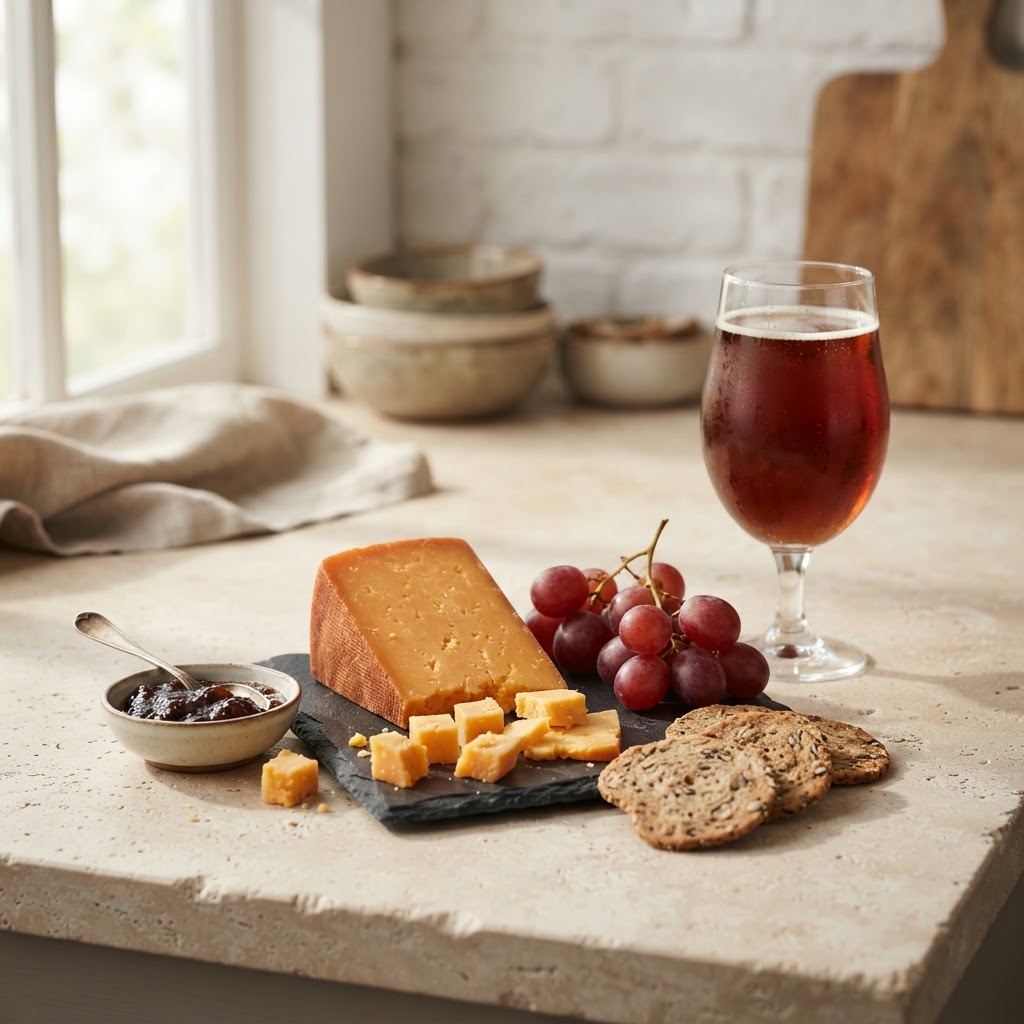
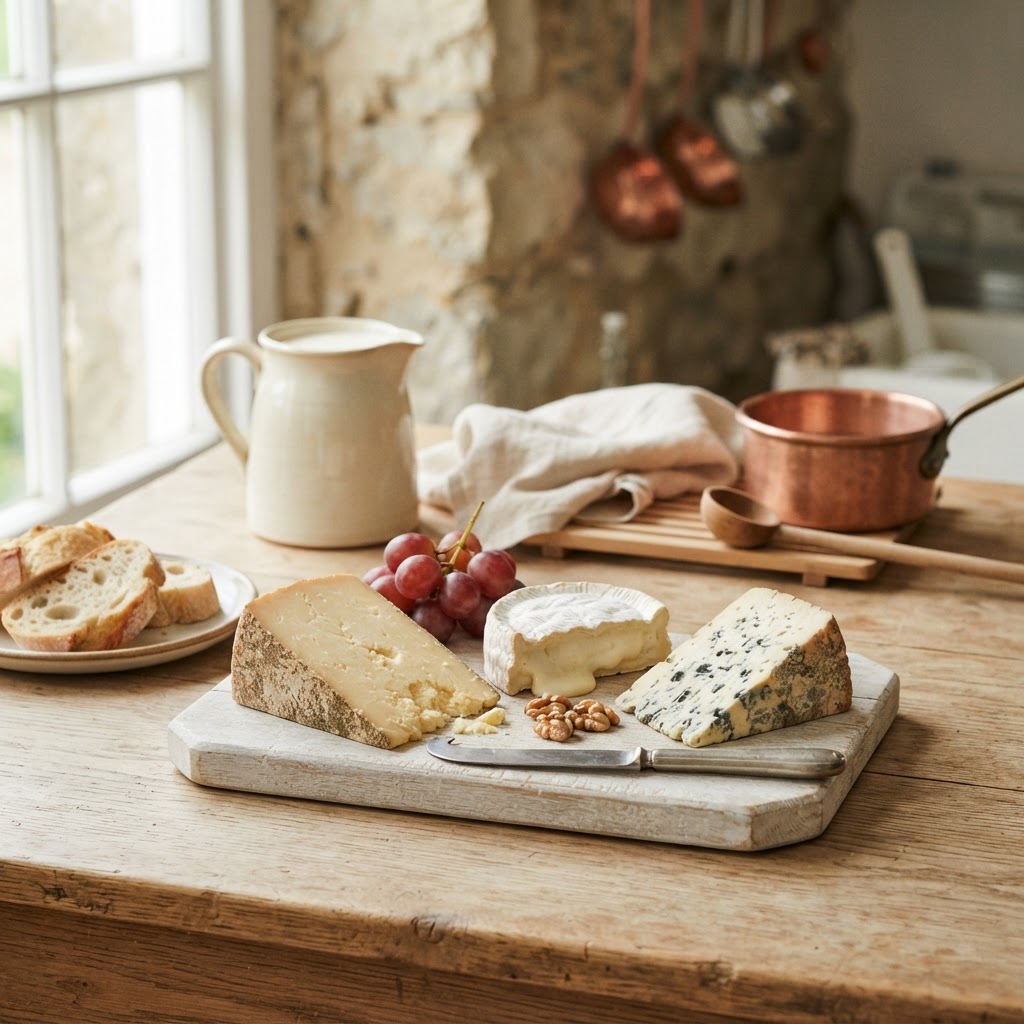
A varied cheese board with subtle cheesemaking and milk details
A little milk. A lot of possibilities.
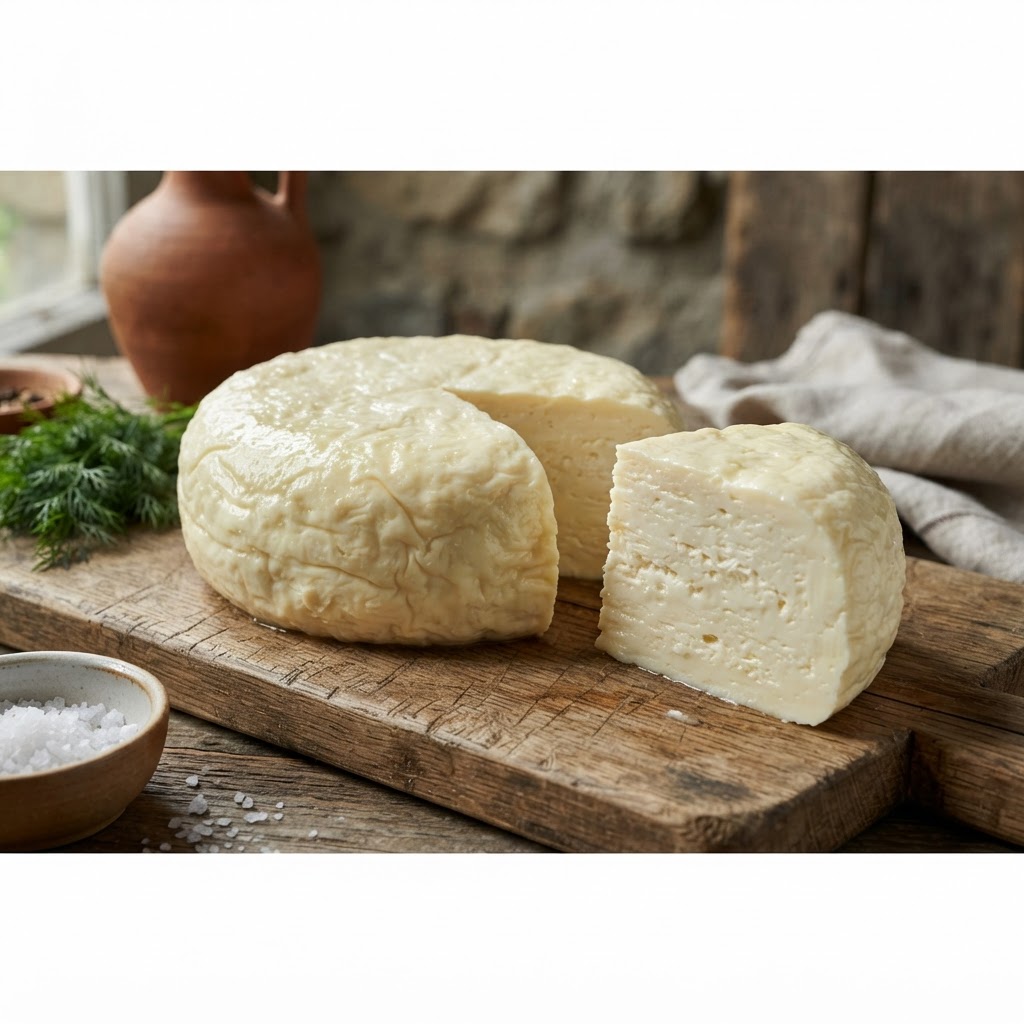
Sulguni
Cheese of the Day

Georgia · Samegrelo

Sulguni

Stretched curd · brined · elastic · tangy

Sulguni is Georgia’s great stretched-curd cheese, elastic, salty and often eaten fresh or lightly smoked.

Flagship guide · Milk to Board

The whole transformation in one journey.

Milk, starter cultures, rennet, curd, whey, salt, rind, ripening, storage and serving — connected rather than treated as isolated facts.

From milk to board

Eight steps. Hundreds of possible cheeses.

The broad sequence is surprisingly consistent. What changes is how hard the cheesemaker pushes each lever.

1

Milk

Everything begins with milk: species, breed, season, feed, fat, protein and heat treatment all change what the cheesemaker has to work with.

2

Acidify

Starter cultures convert lactose into lactic acid. That falling pH changes flavour, texture, mineral balance and how the curd behaves.

3

Coagulate

Rennet, acid or a combination of the two turns liquid milk into a gel. The method helps set the eventual texture, moisture and style.

4

Cut & drain

Cutting the curd releases whey. Smaller cuts, stirring and heat usually drive out more moisture; gentler handling tends to keep more.

5

Shape & press

Curds are ladled, moulded, stacked, milled or pressed depending on the cheese. Structure begins to become recognisable here.

6

Salt

Salt seasons the cheese, pulls moisture, influences microbes and helps control rind formation. It can be mixed in, rubbed on or delivered in brine.

7

Ripen

Enzymes and microbes transform proteins and fats over days, months or years. This is where aroma, softness, savouriness and complexity build.

8

Serve

Storage, temperature, cutting and timing all affect the cheese that finally reaches the board. A good cheese can still be dulled by poor handling.

Follow the full process

Go deeper

The bits that make cheese make sense.

Dip into the science when it helps, then come back to flavour, texture and the cheese in front of you.

The starting chemistry

Milk, Cultures & Rennet

Before there is a curd, three things do most of the early work: the milk itself, the microbes that acidify it and the coagulation method that turns liquid into a gel.

Inside the curd

Cheese Biochemistry: What Actually Changes?

Cheese ripening is a cascade of biochemical reactions. Proteins soften, fats release aroma molecules, sugars disappear and microbes keep reshaping the environment around them.

A better map than colour alone

Cheese Families & Texture

Fresh, bloomy, washed, blue, hard, brined and stretched-curd cheeses are useful families because they describe how the cheese was made and ripened — not just how it looks.

The living surface

Rinds, Moulds & Microbes

The outside of a cheese can be a protective skin, a carefully managed microbial habitat or both. White mould, orange smear, blue veins and natural rinds each tell a different biological story.

Time, humidity and judgement

Affinage: What Ageing Does to Cheese

Age alone does not improve cheese. Ripening works when moisture, temperature, airflow, microbes and turning are managed so the cheese develops rather than merely gets older.

Milk has an origin too

Cow, Goat, Sheep, Buffalo — and Place

Species matters, but so do breed, pasture, season, climate and farming system. “Goat’s cheese” is no more a single flavour than “red wine”.

Flavour, process and safety

Raw vs Pasteurised Milk Cheese

Raw milk keeps its native microbial community; pasteurisation reduces microbial risk and gives the cheesemaker a more controlled starting point. Neither term alone tells you whether a cheese will be good.

Look after the cheese you bought

Storing, Cutting & Serving Cheese

Cheese is still changing after you bring it home. The aim is to slow unwanted drying and spoilage without sealing a living food into the wrong environment.

Fat, salt, acid and aroma

Why Cheese Pairings Work

Cheese pairing becomes easier once you stop memorising rules and start looking at structure: fat, salt, acidity, sweetness, intensity, texture and the aromas shared between both sides.

Cheese families

A better map than mild, medium and strong.

Fresh & unripened

High-moisture cheeses such as ricotta, cottage cheese, cream cheese and fresh goat’s cheese are usually mild, lactic and delicate because little or no ripening follows production.

Bloomy rind

Brie- and Camembert-style cheeses ripen from the outside inward. White moulds soften the paste and build mushroom, cream and cabbage-like aromas as the cheese matures.

Washed rind

Regular washing encourages salt-tolerant surface microbes. The rind can become orange, sticky and famously aromatic while the interior turns supple or creamy.

Blue

Penicillium mould grows along air channels inside the cheese. Oxygen, piercing, salt and moisture help determine whether the result is crumbly, creamy, sharp or sweet.

Hard & cooked-curd

Cheddar, Alpine and grana-style cheeses remove more moisture and often mature for longer, concentrating savoury, nutty, brothy and crystalline flavours.

Pasta filata

Mozzarella, provolone and related cheeses are stretched in hot water once the curd reaches the right acidity, creating their characteristic layered, elastic structure.

Acid-set & lactic

Some cheeses depend more heavily on acidification than rennet. Slow draining and high moisture can create fragile textures and bright, tangy flavour.

Brined

Feta and similar cheeses mature in brine, which controls moisture, salt and microbial activity while preserving a distinctly crumbly or yielding texture.

Understand the families

Milk matters

Cow, goat, sheep, buffalo — then everything else.

Cow’s milk

Usually the broadest canvas: buttery, grassy, nutty, brothy or powerful depending on breed, season, make and ageing.

Goat’s milk

Often bright, mineral, herbal or tangy, although age can take it towards dense, nutty and savoury territory.

Sheep’s milk

Rich in fat and protein, making it especially suited to concentrated, creamy or firm cheeses with a sweet, lanolin-like depth.

Buffalo milk

High solids and generous fat help create lush texture, famously in mozzarella di bufala but also in other fresh and aged cheeses.

Mixed milk

Blending milks lets cheesemakers combine richness, acidity, aroma and structure rather than treating species as rigid flavour categories.

Follow milk and place

Taste it for yourself

A few cheeses that make the ideas real

Fresh, bloomy, blue, hard and everything between are easier to understand with an actual cheese in front of you.

Cheese Lovers Letter Box Hamper product image

Letter Box Hamper

Cheese Lovers Letter Box Hamper

Why it caught our eye

Beautifully wrapped in traditional parcel paper, with twine and ink stamps, this new larger edition of the cheese & biscuits through the post contains two of Britain's best cheeses - Godminster's award winning cheddar from the West Country and Caws Cryf from Wales - as well as biscuits for cheese, salted nuts and red onion chutney. The greatest indulgent gift that any self respecting lover of cheese could hope to receive! The letter box gift hamper contains: A personalised card with the recipient's name and your personal message. Godminster’s award-winning vintage Organic Cheddar, made from a unique 70-year-old recipe using milk from their dairy herd on Godminster Farm in Somerset. A truckle of Caws Cryf Cheese. Made in Wales and slightly softer than a cheddar, it is a mature cheese with a lovely texture and mellow rich flavour. Wax wrapped for freshness. All British Cheddar Crackers. Made with freshly grated Wookey Hole cave aged Cheddar, hand baked the West Country.

£34.95

Real Food Hub

View
The Cheesemonger's Choice - Free Delivery product image

The Courtyard Dairy

The Cheesemonger's Choice - Free Delivery

Why it caught our eye

This surprise selection of the very best cheeses on The Courtyard Dairy’s counter is waiting to be delivered direct to you. The Courtyard Dairy’s cheesemongers select their favourite cheeses on the counter each week, ranging from oozing ripe Brie to strong tangy Cheddar. The selection will vary weekly – but each cheese will always be first-class. Each selection includes three cheeses (min. weight 600g) plus a packet of crackers and a detailed article on the cheese producers, as well as a topical information feature on cheese. Includes Free delivery.

£31.00

Real Food Hub

View

Chosen for editorial usefulness, variety and live availability where known.

Browse cheeses & gifts

What goes underneath?

Crackers, oatcakes and thins change the cheese-to-crunch ratio.

A neutral water cracker, nutty oatcake or fruit-and-seed thin can play very different roles on the same board. Follow Flour to Snap into the savoury side.