Sip the World
Africa & Middle East

Sip Ethiopia

The forests, highlands and human rituals behind coffee.

The origins of Arabica, diverse Ethiopian coffee landscapes, washed and natural processing, farmers, washing stations, and the jebena coffee ceremony, without invented affiliate listings.

Same place · two views

You are in the experience view. Switch to the Atlas to understand the coffee behind the place.

East Africa · Coffee farms & the cup

Ethiopia: where coffee begins, and every harvest tells a story

Travel from the forests of southwest Ethiopia to Yirgacheffe, Sidama, Guji and Harar. Learn to recognise a coffee lot by its producer, growing area, processing method and roast rather than a single romantic origin name. Coffee, not alcohol, is the centre of this journey.

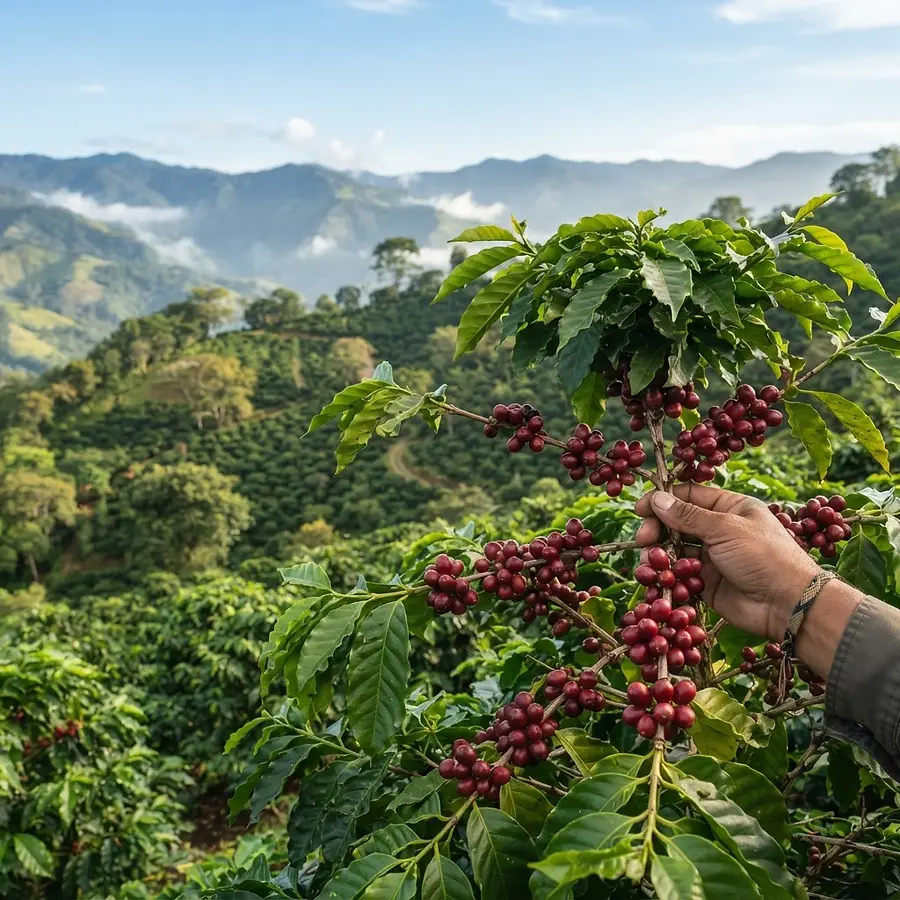
Illustrated ripe coffee cherries on a coffee tree; not a photograph of a named Ethiopian farm or grower

Why this place matters

Arabica forests, highland farmers, washed and natural coffees, and the hospitality of the jebena.

Follow the landscape, the people and the preparation. A protected origin is never casually attributed to an unrelated product or ingredient.

Explore the companion guide
01

Southwest highlands · forest landscapes

Coffee origins

The forests behind Coffea arabica

Ethiopia is central to the biological and cultural history of Arabica coffee. Wild and semi-wild Coffea arabica populations in forest environments form an important reservoir of diversity. From there, coffee cultivation and the preparation of coffee as a drink developed across regions and centuries; no single neat legend can replace the detailed history.

Coffee is not originally a uniformly planted industrial crop. Forest, semi-forest, garden and plantation production systems can differ. Protecting biodiversity, preserving local knowledge and recognising land rights matter just as much as counting bags exported. This is why the first chapter begins with trees and people, not a shopping list.

Into the glass: Try a coffee brewed black first to understand its aromatics without assuming every Ethiopian cup is floral.

Styles, techniques and products
02

Highlands · smallholder farms

From cherry to harvest

Shade, soil, altitude and the coffee cherry

Coffee grows on a flowering shrub or small tree that carries fruits often called cherries. Each usually holds two seeds, which we call coffee beans. Ripening is not perfectly uniform, so skilled pickers often make repeated passes for mature fruit rather than harvesting everything at once.

Altitude, rain patterns, shade, variety, farm care and ripeness affect the outcome, but they do not decide a flavour independently. Even neighbouring farms can produce different coffees. Specific region and lot information is a far better buying guide than a promise that all high-altitude coffee is best.

Into the glass: A fresh cherry has fruit flesh around the seed; the cup begins with agriculture, not roasting.

Styles, techniques and products
03

Gedeo area · southern Ethiopia

Regional distinction

Yirgacheffe and Gedeo: aromatic possibilities

Yirgacheffe is a famous speciality coffee name associated with the Gedeo area. Certain washed lots can be delicate, bright, floral or tea-like, sometimes suggesting jasmine and citrus. Natural-processed coffees from the wider area may present a very different fruity impression.

The name on a bag is not a guarantee of a particular cup, and sellers may use names at different geographic levels. Look for a washing station, group or producer name, harvest, processing and roast date. A lot's traceability matters more than a copied list of tasting notes.

Into the glass: Compare a washed Yirgacheffe as filter coffee and note acidity and aroma separately.

Styles, techniques and products
04

Sidama Region · southern highlands

Regional distinction

Sidama: its own highland identity

Sidama is not a marketing synonym for Yirgacheffe, nor should every Sidama coffee be described as blueberry flavoured. Farms and processing stations can produce washed and naturally processed lots with different balances of fruit, sweetness, body and clarity.

The spellings Sidama and Sidamo appear in trade and history, but they should not automatically be applied to every nearby region. Modern administrative geography, traditional place terms and export labels can differ. We make that distinction visible to help buyers choose with care.

Into the glass: Try a washed and a natural lot from the same named area if a supplier can provide good traceability.

Styles, techniques and products
05

Guji Zone · Oromia

Regional distinction

Guji: coffee shaped by variety and process

Guji has developed a strong speciality-coffee reputation, including lots with florals, ripe stone-fruit suggestions and notable sweetness. None of those descriptors are compulsory. Producer, altitude, variety selection and processing method all influence what reaches a roaster.

Some coffees are sold by the name of a washing station or local community, while others are blended across growers. A responsible editorial guide should explain which is which, without inventing an individual farmer's name for a lot that is not traceable to one person.

Into the glass: Brew a well-documented Guji beside Yirgacheffe at the same strength and temperature to compare.

Styles, techniques and products
06

Eastern highlands · western forests

Other coffee landscapes

Harar, Limu and Kaffa: coffee beyond the famous trio

Harar has a historical reputation for sun-dried natural coffees, while Limu names a western Ethiopian coffee origin and Kaffa is important to coffee's wild-forest story. Their many growers, soils, and processing arrangements should not be reduced to a fixed hierarchy of 'better' and 'worse' regions.

Historic and current trade names vary, and a label alone does not establish quality or even pinpoint one farm. A map helps the visitor understand the diversity without pretending all regions grow, process and ship coffee through identical routes.

Into the glass: For a future tasting set, select three genuinely labelled region lots rather than generic 'African coffee'.

Styles, techniques and products
07

Collection points · washing stations · drying beds

From fruit to green bean

Washed versus natural: how fruit changes a cup

Natural processing dries the coffee seed inside the whole cherry, then removes dried layers. Washed processing generally removes fruit before controlled washing or fermentation and drying. Both need care: picking, sorting, water management, drying time and storage affect defect risk and final flavour.

Washed coffees are often described as clear or bright, and naturals as fuller or fruitier, but they overlap. Neither is universally superior. Some producers also experiment with honey and other controlled processing styles. Sipping should show method and lot evidence, not suggest any process automatically adds fruit syrup or sugar.

Into the glass: Compare coffees of the same origin and roast level processed two different ways; note aromatics and body.

Styles, techniques and products
08

Smallholders · stations · exporters · roasters

The human supply chain

Who gets paid for a cup of coffee?

The path from farmer to cup often passes through cherries, collection points, washing stations, dry mills, export, green-coffee importing, roasting and retail. Not every coffee moves through exactly the same structures, and a retail price cannot reveal the farmer's share by simple subtraction.

Traceability, farmgate pricing, crop volatility, climate risk and cooperative arrangements should be discussed with evidence. We will not invent stories about named growers or use portraits without permission. When a suitable affiliate roaster joins Sipping, its product listings should include origin specificity and documented sourcing claims.

Into the glass: A useful coffee purchase tells you where it came from, how it was processed and when it was roasted.

Styles, techniques and products
09

Homes and gathering places · Ethiopia

Coffee and community

The jebena ceremony: hospitality over speed

The Ethiopian coffee ceremony is an important social practice, though its details vary by community and household. In commonly described versions, beans are roasted, aromas shared, coffee ground and brewed in a jebena clay pot. Conversation and hospitality are as essential as the liquid in the cup.

Three rounds may be served under names often rendered abol, tona and baraka, but not every household performs exactly the same ritual. Respectful editorial should explain variations, avoid treating a private ceremony as a tourist prop and use images only with permission or accurate descriptive context.

Into the glass: A cup of freshly prepared coffee with time for conversation is the most appropriate takeaway.

Styles, techniques and products
10

Filter · pour-over · cafetière · espresso

Practical guide

Brew Ethiopia at home without a shopping shortcut

A well-roasted Ethiopian coffee can work as filter, cafetière or espresso, although the best method depends on the actual roast and grind. As a starting point, try 15 grams of coffee for 250 grams of water, then adjust grind and ratio by taste. Water quality, freshness and pouring technique will change the result.

For now Sipping has no verified Ethiopia-origin coffee from an approved affiliate feed. That means no invented 'buy now' cards, no repurposed coffee liqueur and no false claim that a whisky mentioning Arabica is coffee beans. The guide offers education and links to the Coffee Atlas until an eligible roaster with documented lots is available.

Into the glass: Filter starting point: 15g freshly ground coffee, 250g clean water, then adjust by taste.

Styles, techniques and products

Know what the words mean

The Ethiopian Coffee glossary

Arabica

Coffea arabica, a coffee species with important natural diversity in Ethiopia.

Coffee cherry

The fruit containing the seeds later roasted as beans.

Washed process

Fruit removal, fermentation/washing and drying under controlled conditions; specific steps vary.

Natural process

Whole coffee cherry is dried before removing its dried outer layers.

Washing station

Facility where cherry lots are collected and/or processed; not automatically one named farm.

Landrace

Locally maintained and adapted plant population, not a generic guarantee of flavour.

Roast date

Useful indication of how recently beans were roasted; not a complete quality score.

Jebena

Clay coffee pot used in Ethiopian brewing traditions.

Traceability

Evidence linking a coffee lot to a region, station, cooperative or farmer.

Cupping

Standardised sensory evaluation used in the coffee trade.

A journey, not a drinking schedule

Explore Ethiopia in five stops

A suggested route for understanding the place and its people; check local access, transport and seasonal opening hours.

01 / Journey

Southwestern forests

Learn about Arabica biodiversity and forest coffee.

02 / Journey

Sidama

Explore farms, processing and regional identities.

03 / Journey

Gedeo / Yirgacheffe

Learn the difference between geographic names and particular lots.

04 / Journey

Guji

Visit the agricultural and washing-station story with appropriate permissions.

05 / Journey

Addis Ababa

Discover coffee cafés and ceremony traditions across communities.

The Sipping catalogue promise

A coffee origin story without fake products

Sipping does not yet have a verified Ethiopian-origin coffee through an approved affiliate feed. The guide stays educational until a properly sourced coffee and image are available.

Read the coffee origin guide

Research and provenance

Regional traditions are informed by official origin, producer and cultural references wherever available. Product listings remain separate from claims about farms or ingredients. Photographs are illustrative unless explicitly identified.

Keep discovering

Where will good taste take you next?