Sip Scotland
Scotland

Sip Islay

Peat smoke, sea air and some of Scotch whisky's boldest flavours.

An island where peat, fermentation, still design and cask choices produce whisky from deeply smoky to gently fruity. Explore distillery stories and genuine approved partner bottles.

Scotland · Whisky, island & the still

Islay: smoke, sea and the people behind the stills

Travel across Islay's coast, peatlands, villages and stillhouses. Discover why one island can make peppery, medicinal, fruity, sherry-led and largely unpeated malts—and how to choose the right dram without chasing price or hype.

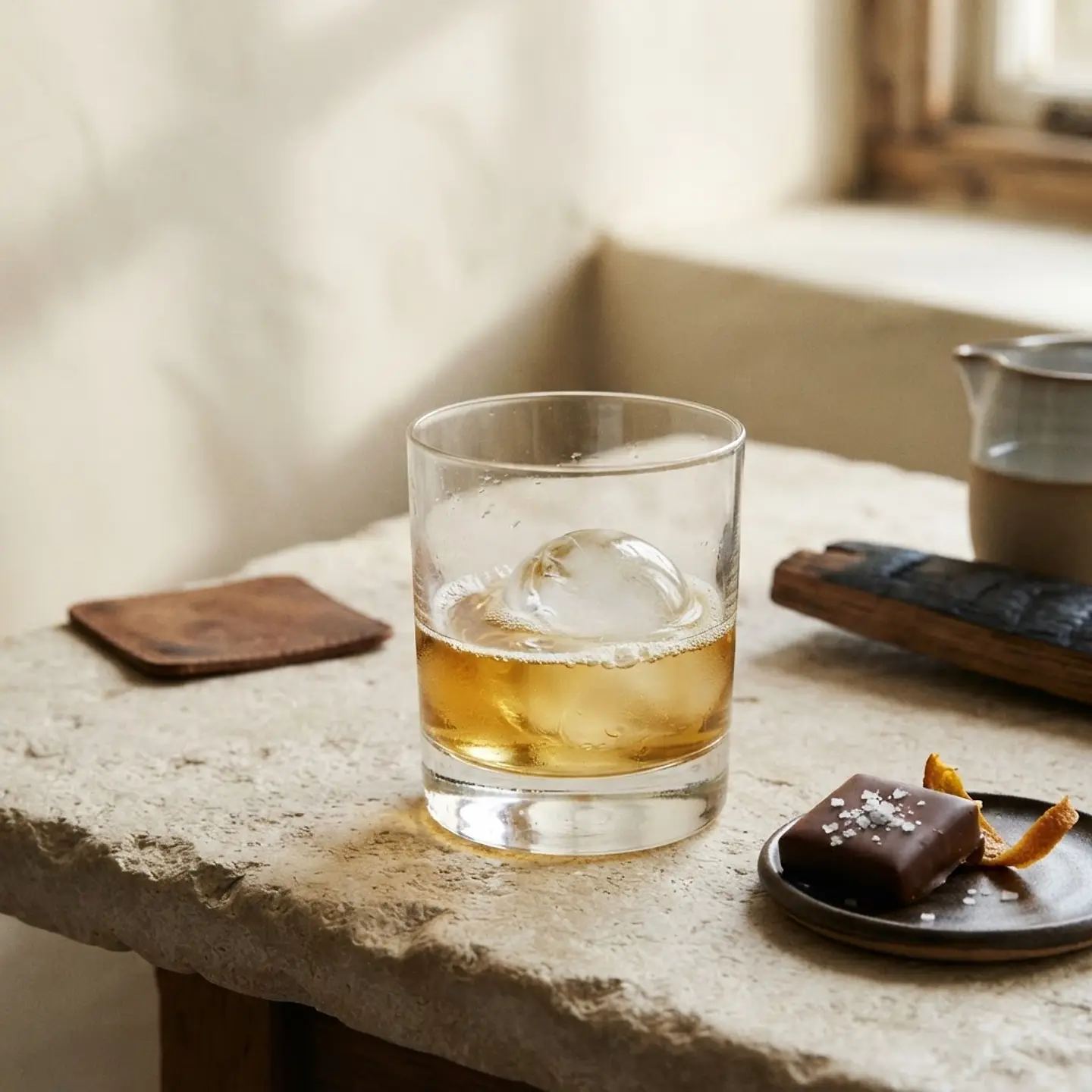
Atmospheric illustrative whisky-island landscape; artwork is not documentary evidence of any named Islay distillery

Why this place matters

Peat is only the beginning. Ten distilleries, very different methods and bottles to explore.

Follow the landscape, the people and the preparation. A protected origin is never casually attributed to an unrelated product or ingredient.

Explore the companion guide
01

Inner Hebrides · west coast Scotland

Landscape & tradition

Islay is a place, not a tasting note

From ferry approaches and coastal roads to peatlands and storm-battered bays, Islay feels remote without being isolated. Whisky making sits within a living island community of farming, fishing, tourism and trade. Water, malt deliveries, transport and weather all play a part in production, but the salt air itself does not magically season every spirit with sea spray.

The Scotch Whisky Association recognises Islay as one of the five traditional Scotch whisky regions. A label saying Islay says something precise about location; it cannot predict one flavour. Producers choose malt, fermentation times, still shapes, peat levels and casks. Those decisions explain much more than the postcode.

Into the glass: Start with two distilleries rather than two expensive age statements.

Styles, techniques and products
02

Maltings · peatlands · kilns

Peat explained

Peat smoke: what happens before the still

Peat smoke can flavour barley during the malting process when the germinated grain is dried over a peat-fired kiln. Phenolic compounds contribute aromas often described as smoky, medicinal or earthy. Laboratory phenol figures such as PPM can refer to malt before distillation; they are not a direct measure of how smoky a finished whisky will taste.

Different distillers use peated or unpeated malt, and some own specific malting traditions while others purchase prepared malt. The degree of peat and the point at which smoke interacts with other aromas matter. A little water in the glass may change the nose, but there is no universal correct dilution.

Into the glass: Compare a peated Ardbeg or Laphroaig with a largely unpeated Bunnahabhain.

Styles, techniques and products
03

Port Ellen · south shore

Three famous neighbours

South coast: Ardbeg, Laphroaig and Lagavulin

The southern shore is home to some of Scotch whisky's most recognisable names. Ardbeg often emphasises robust peat with surprising citrus and sweetness; Laphroaig is famous for assertive phenolic character; Lagavulin is widely associated with deep smoke and rounded richness. Those are broad profiles, not permanent chemical formulas.

An eight-year Lagavulin does not become the same wine—nor even the same whisky—as a sixteen-year release simply by adding time to the description. Cask selection, proof and production era shape the result. A tasting comparison should keep price and bottle size visible, and should not steer a new drinker towards rare collector whiskies by default.

Into the glass: Taste a small pour alongside plain water; identify fruit and spice as well as smoke.

Styles, techniques and products
04

Sound of Islay · north-east

Contrasts on one coast

From Caol Ila to Bunnahabhain: not all smoke

Caol Ila is often recognised for a relatively clean, precise peated style that can serve as a bridge into heavier south-coast malts. Bunnahabhain's core twelve-year release, by contrast, is generally based on unpeated malt and can lean towards fruit, nuts, maritime suggestions and sherry-cask influence. Specific releases from either producer can depart from those descriptions.

The new Ardnahoe distillery adds another chapter to the island's whisky map. Do not assume an unfamiliar distillery has the history or stock of an established one. Visiting the north-east illustrates how geography creates a journey while production decisions create individual whisky styles.

Into the glass: Bunnahabhain versus Caol Ila is a useful way to learn that Islay is not all peat.

Styles, techniques and products
05

Bowmore · Loch Indaal

One of Islay's long-running names

Bowmore and Loch Indaal: tradition in the middle

Bowmore, beside Loch Indaal, offers another way into the island. Some expressions balance peat with orchard fruit, citrus, cocoa or oak-led notes depending on maturation. The town's distillery history matters, but each bottling still needs its own age statement, cask and strength checked before purchase.

Look for visitor experiences that explain the malting, washbacks and spirit stills as well as the shop shelves. A named distillery's special edition should not be quietly substituted for its standard bottling in an affiliate card.

Into the glass: A familiar Bowmore 12 is a useful reference against both a south-coast and north-coast whisky.

Styles, techniques and products
06

Bruichladdich · Loch Indaal

Peat is a choice

Bruichladdich, Port Charlotte and Octomore: one producer, varied smoke

At Bruichladdich, different ranges deliberately demonstrate a wide stylistic spectrum. The Classic Laddie is generally unpeated, while Port Charlotte is heavily peated and Octomore is known for unusually high phenol levels in its malt. These names represent whisky ranges, not separate nearby villages or distilleries.

Statements about barley origin, maturation and bottle age should come from the exact release. High PPM alone does not prove a particular drinking sensation. The same distillery's choices can be as influential as a trip from one side of the island to the other.

Into the glass: Explore the contrast in principle even when the catalogue has only a verified Port Charlotte bottle.

Styles, techniques and products
07

Machir Bay · western Islay

Farm-distillery revival

Kilchoman and a changing distillery landscape

Kilchoman is associated with a more recent chapter in Islay distilling and with its farming context. Some releases make a particular point of local barley and on-site steps, while other expressions use differently sourced materials. Only the exact bottle and producer specification can establish a farm-to-bottle claim.

Named editions and cask-strength variants may differ from a standard Machir Bay. The coastal walk, farm context and stories of small producers are excellent editorial content, but should not be used to suggest that all Islay whisky is handmade by the same process.

Into the glass: Compare the standard Machir Bay to an edition-specific cask-strength release only when properly labelled.

Styles, techniques and products
08

Mash tuns · washbacks · copper stills · warehouses

How whisky is made

From fermented wash to spirit and oak

Whisky starts with grain, water and fermentation. The fermented wash is distilled in copper pot stills for single malt Scotch; alcohol strength and the shape and operation of the still influence the spirit. Scotch single malt must meet its legal requirements, including production and maturation in Scotland, and cannot be described as Scottish merely because a barrel sat near the sea.

Oak casks transform the whisky over time. Ex-bourbon barrels and sherry-seasoned oak are common choices, but the actual history of each cask matters. Warehouse placement and batch blending also influence the result. Age statements count maturation time, not added-value points on a scorecard.

Into the glass: Try a distillery's core expression before an expensive finished or single-cask bottle.

Styles, techniques and products
09

Coastal villages · seafood · walking

Food & alcohol-free alternatives

Islay without the whisky checklist

Islay deserves to be visited for its landscapes, music, local food, small villages and dramatic weather—not only distillery queues. Shellfish, smoked fish, cheese and simple local baking can provide the context for a modest whisky tasting on another occasion. Fish dishes often benefit from sparkling water or an apple-led alcohol-free spritz just as readily.

Visitors need to plan ferries, transport and designated drivers carefully: a distillery itinerary is not a suggested schedule of drinking. Distiller tours and cafés may have different operating seasons. Whisky tasting is optional; appreciating the production, place and people is not.

Into the glass: Smoked fish with apple soda, black tea or mineral water makes an excellent non-alcoholic coastal pairing.

Styles, techniques and products

Know what the words mean

The Islay Whisky glossary

Islay

A legally recognised Scotch whisky production region, not a guaranteed smoky flavour.

Peated malt

Barley dried using peat smoke during malting.

PPM

A phenol measurement often discussed for malt; not a linear score for the finished whisky.

Single malt Scotch

Scotch whisky made at one distillery from malted barley in pot stills under Scotch rules.

Ex-bourbon cask

Oak previously used for bourbon, affecting maturation.

Sherry-seasoned cask

Oak prepared using sherry for maturation; not the same as adding sherry to whisky.

Cask strength

Bottling strength near the strength in cask, which varies by release.

Age statement

Usually the age of the youngest Scotch whisky in the stated blend/bottling.

Independent bottler

A company bottling whisky sourced from distilleries; releases require exact provenance checks.

A journey, not a drinking schedule

Explore Islay in five stops

A suggested route for understanding the place and its people; check local access, transport and seasonal opening hours.

01 / Journey

Port Ellen and the south coast

Compare distillery histories of Laphroaig, Lagavulin and Ardbeg.

02 / Journey

Bowmore and Loch Indaal

See village life and a contrasting malt-making tradition.

03 / Journey

Bruichladdich

Understand why one distillery makes unpeated and very peated ranges.

04 / Journey

Kilchoman and Machir Bay

Meet farm-distillery heritage and the Atlantic landscape.

05 / Journey

Caol Ila and Bunnahabhain

Finish on the Sound of Islay with opposite peat profiles.

The Sipping catalogue promise

12 authentic product matches

These are curated existing product records, not invented inventory. Retailers confirm prices, delivery and availability. Citrus mixers are never passed off as fruit grown here.

Explore the buying guide

Research and provenance

Regional traditions are informed by official origin, producer and cultural references wherever available. Product listings remain separate from claims about farms or ingredients. Photographs are illustrative unless explicitly identified.

Try it at home

Related Sipping picks

Genuine Islay distillery whiskies with approved product photos, including peated, largely unpeated and cask-strength examples. Retailers confirm price and stock.

Ardbeg 10 Year Old Islay Single Malt Scotch Whisky
From this place

Ardbeg 10 Year Old Islay Single Malt Scotch Whisky

Flagship Ardbeg whisky: smoky with citrus-like impressions, not a fixed tasting promise.

Laphroaig 10 Year Old Islay Single Malt Scotch Whisky
From this place

Laphroaig 10 Year Old Islay Single Malt Scotch Whisky

Strong peat and distinctive coastal character.

Lagavulin 8 Year Old Islay Single Malt Scotch Whisky
From this place

Lagavulin 8 Year Old Islay Single Malt Scotch Whisky

An introductory Lagavulin bottling; avoid mixing with vintage collectible releases.

Bowmore 12 Year Old Islay Single Malt Scotch Whisky
From this place

Bowmore 12 Year Old Islay Single Malt Scotch Whisky

Bowmore's longstanding Islay style; explore balance and cask influences.

Caol Ila 12 Year Old Islay Single Malt Scotch Whisky
From this place

Caol Ila 12 Year Old Islay Single Malt Scotch Whisky

A malt often associated with a cleaner smoky style.

Kilchoman Machir Bay Islay Single Malt Scotch Whisky
From this place

Kilchoman Machir Bay Islay Single Malt Scotch Whisky

Farm-distillery heritage; bottling mix depends on edition.

Bunnahabhain 12 Year Old Islay Single Malt Scotch Whisky
From this place

Bunnahabhain 12 Year Old Islay Single Malt Scotch Whisky

Classic generally unpeated Islay; proof the island does not mean one flavour.

Port Charlotte 10 Year Old Islay Single Malt Scotch Whisky
From this place

Port Charlotte 10 Year Old Islay Single Malt Scotch Whisky

Heavily peated whisky from Bruichladdich distillery.

Lagavulin 16 Year Old Islay Single Malt Scotch Whisky 70cl Islay Whisky
From this place

Lagavulin 16 Year Old Islay Single Malt Scotch Whisky 70cl Islay Whisky

Long-established sixteen-year bottling; check the currently offered edition.

Laphroaig 10 Year Old Sherry Oak Finish Islay Whisky
From this place

Laphroaig 10 Year Old Sherry Oak Finish Islay Whisky

How cask influence can interact with peat, not a second distillery.

Bunnahabhain 12 Year Old Cask Strength / 2025 Release Islay Whisky
From this place

Bunnahabhain 12 Year Old Cask Strength / 2025 Release Islay Whisky

A batch-specific cask-strength comparison; not the standard 12-year bottling.

Kilchoman Machir Bay Cask Strength / 2025 Edition Islay Whisky
From this place

Kilchoman Machir Bay Cask Strength / 2025 Edition Islay Whisky

Batch-specific expression; final retailer price and stock must be checked.

Keep discovering

Where will good taste take you next?