← Herbal infusions

Herbal & fruit infusions · Foundation

What is herbal tea — and is it really tea?

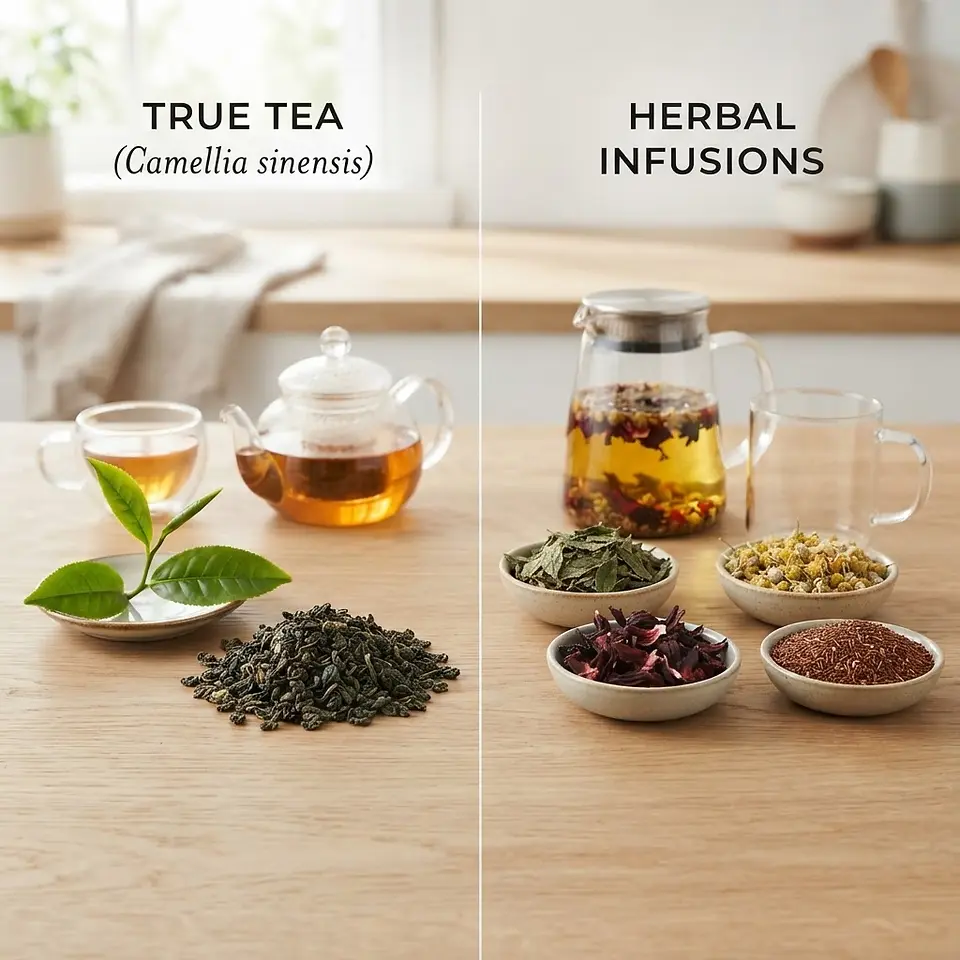
In everyday language, peppermint tea, chamomile tea and fruit tea all make perfect sense. Botanically, though, they are infusions or tisanes because they are not made from Camellia sinensis.

True tea

Made from Camellia sinensis

Herbal infusion

Leaves, flowers, roots, bark, seeds or spices from other plants

Fruit infusion

Usually fruit pieces, peel, flowers, herbs or natural flavourings

Useful rule

Use familiar “tea” language, then explain the botanical distinction

Tea leaves compared with mint, chamomile, hibiscus and rooibos botanicals.
1

Tea means two things in normal conversation

Strictly speaking, black, green, white, oolong, yellow and dark teas all come from the tea plant, Camellia sinensis. Peppermint, chamomile and rooibos do not.

But people have used the word tea for steeped herbal drinks for generations. Rather than policing everyday language, it is more useful to make the distinction clear.

2

Tisane and infusion

Tisane is a traditional word for a drink made by infusing plant material other than tea leaves. “Herbal infusion” is clearer to many modern drinkers and can include flowers, leaves, roots, bark, seeds and spices.

Fruit infusions may contain dried apple, berries, citrus peel, hibiscus, rosehip and flavourings. They are often naturally free from caffeine unless tea, guarana, mate or another caffeine-containing ingredient is added.

3

Rooibos and honeybush deserve their own place

Rooibos comes from Aspalathus linearis, a South African shrub rather than the tea plant. Honeybush is made from Cyclopia species and is also associated with South Africa.

Both are commonly prepared like tea and sold alongside tea, so keeping them within Sipping’s wider tea-and-infusions world makes sense while preserving their botanical identity.

4

Flowers, leaves, roots and fruit all brew differently

Chamomile uses flowers; peppermint uses leaves; hibiscus drinks commonly use the fleshy calyces around the flower; ginger and turmeric use underground rhizomes; fruit blends may contain pieces, peel and flowers.

That botanical variety is one reason herbal infusions often need different brewing times and temperatures from delicate green or white tea.

5

A note on health language

Herbal drinks are often marketed with words such as detox, sleep, immunity or digestion. Treat those promises cautiously: flavour and traditional use are not the same as a medical claim.

Caffeine status, ingredients, taste and traditional drinking habits can all be described clearly. Specific health claims need appropriate evidence rather than repetition from packaging.

Editorial rule: “traditionally used for” and “commonly chosen for” are not substitutes for evidence. Avoid promising treatment, prevention or cure.

Keep exploring herbal infusions