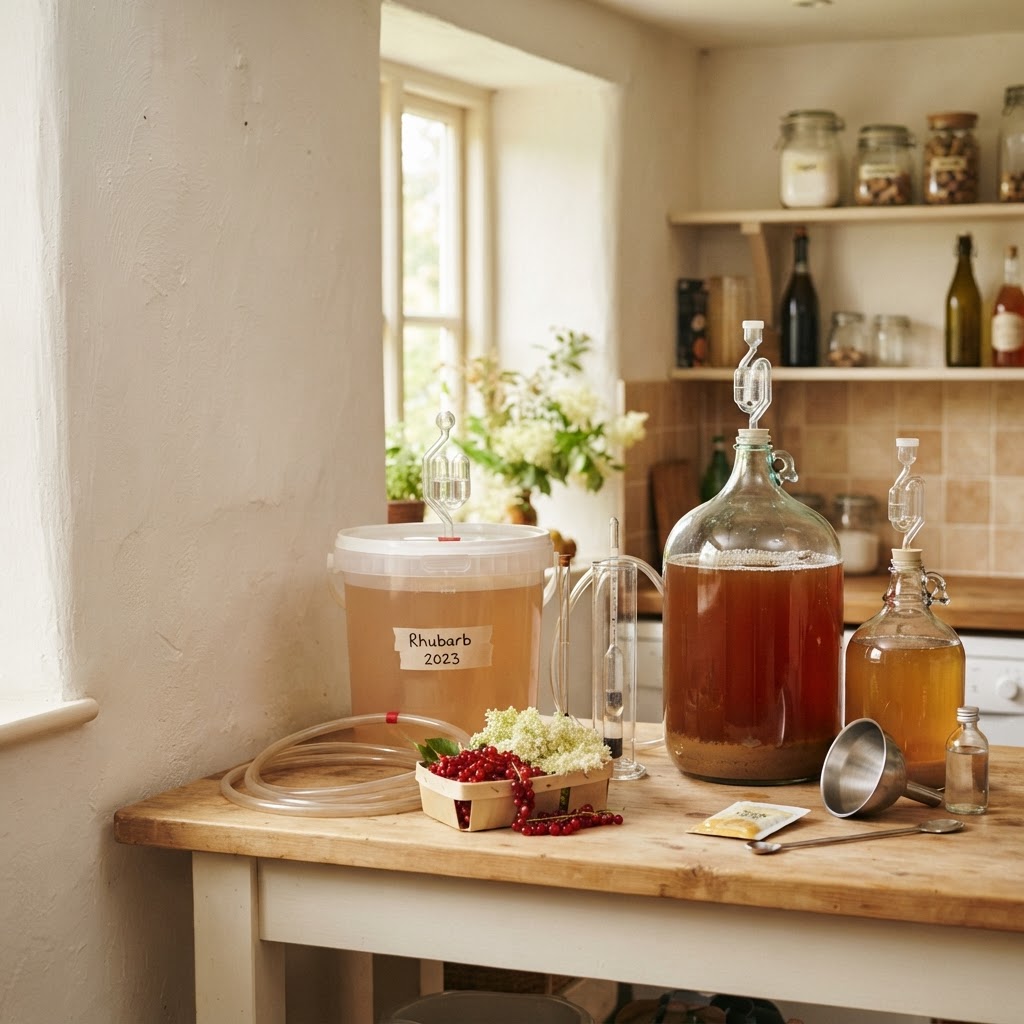
Lowest complexity
Start with a kit
The easiest route if you want to learn the process before worrying about crushing fruit, balancing acidity or choosing yeast.
Home winemaking
You can begin with a simple kit, graduate to fruit wine, or eventually start pressing your own grapes. The process gets more interesting as you add control — not simply more equipment.
Three ways in
A first batch can be surprisingly simple. The sensible path is to learn fermentation and hygiene before buying specialist kit you may never use.
Lowest complexity
The easiest route if you want to learn the process before worrying about crushing fruit, balancing acidity or choosing yeast.
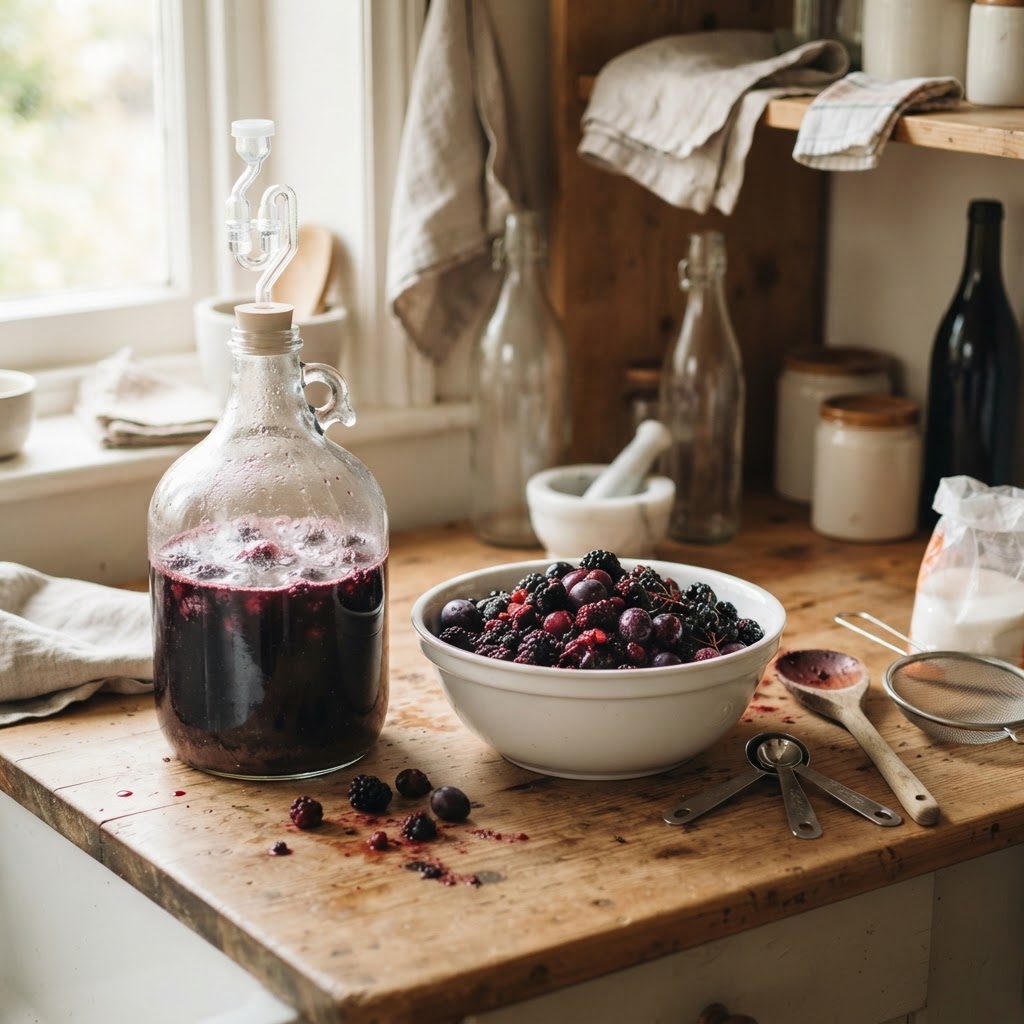
More hands-on
Blackberry, elderberry, plum, damson, rhubarb and other fruits open a much bigger world — and bring more decisions about sugar, acidity and tannin.
More equipment
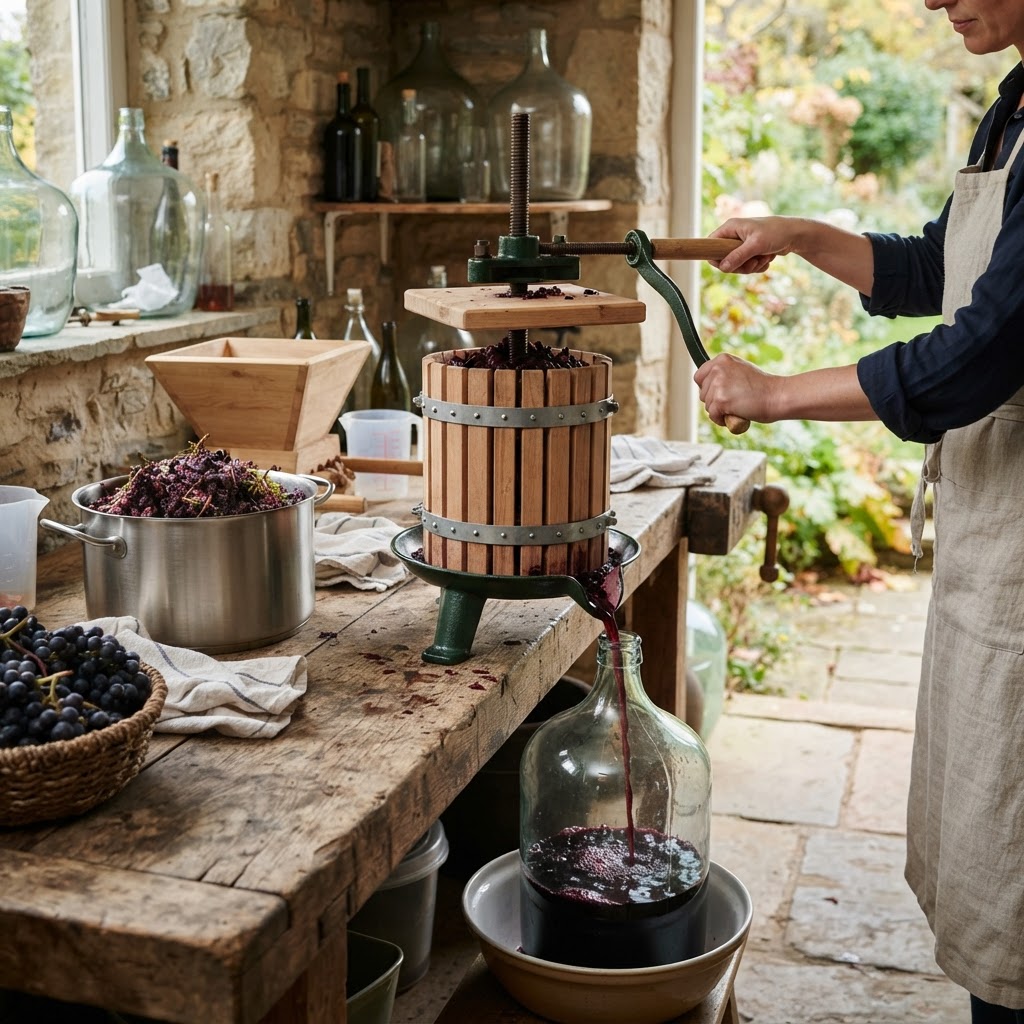
Fresh grapes or juice get you closer to conventional winemaking, but fruit quality and pressing become more important.
Not much. Most starter setups are inexpensive, reusable and easy to store. The biggest beginner mistake is often buying too much before learning the basic rhythm.
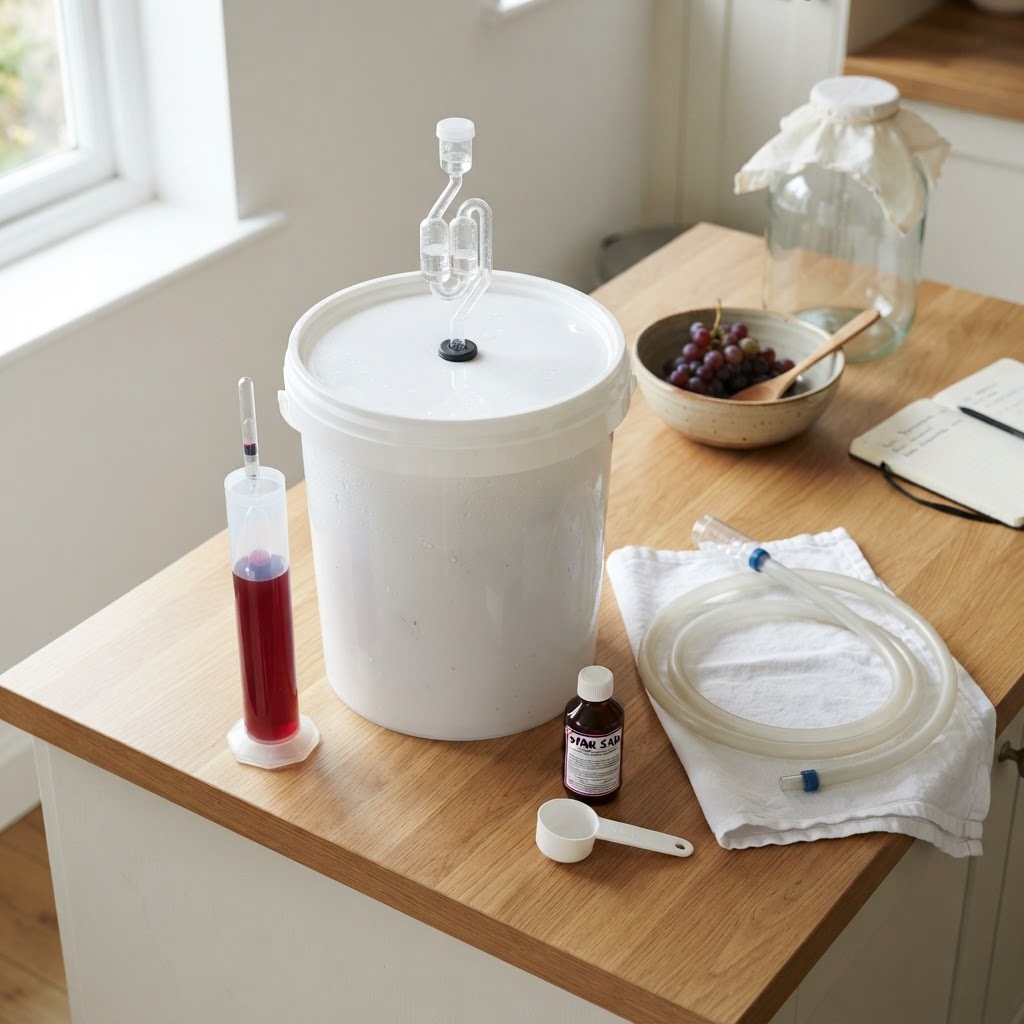
A food-safe bucket or demijohn gives the must somewhere clean and controllable to ferment.
View equipment
Lets carbon dioxide escape while helping keep outside air and insects out.
View equipment
Measures density so you can follow fermentation and estimate when sugar has been consumed.
View equipment
Moves wine off sediment without pouring everything together again.
View equipment
One of the least glamorous pieces of kit — and one of the most important.
View equipment
You can reuse suitable wine bottles, but closures and bottle condition still matter.
View equipment
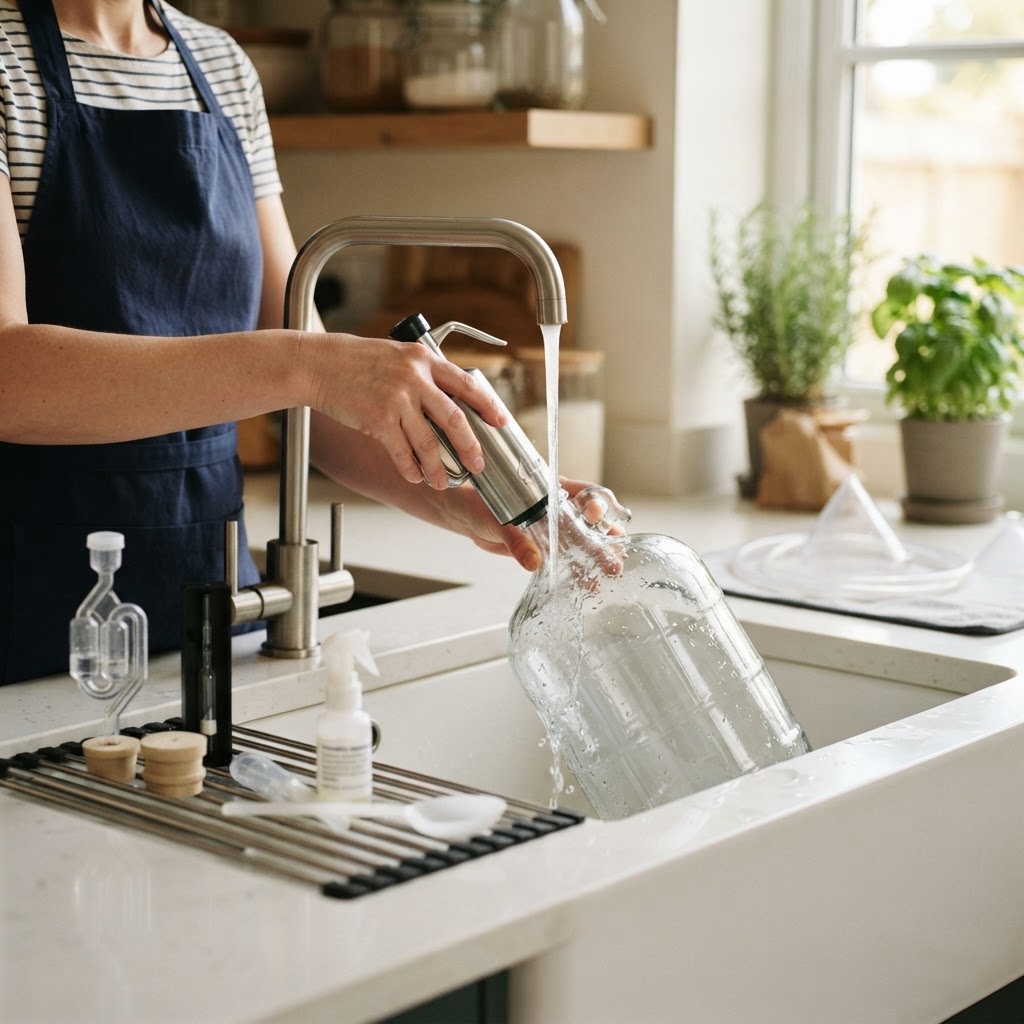
Fermentation is controlled microbial activity. Give your chosen yeast a clean environment rather than asking it to compete with everything else.
Yeast works differently when it is too cold or too warm. Temperature control becomes one of the first worthwhile upgrades.
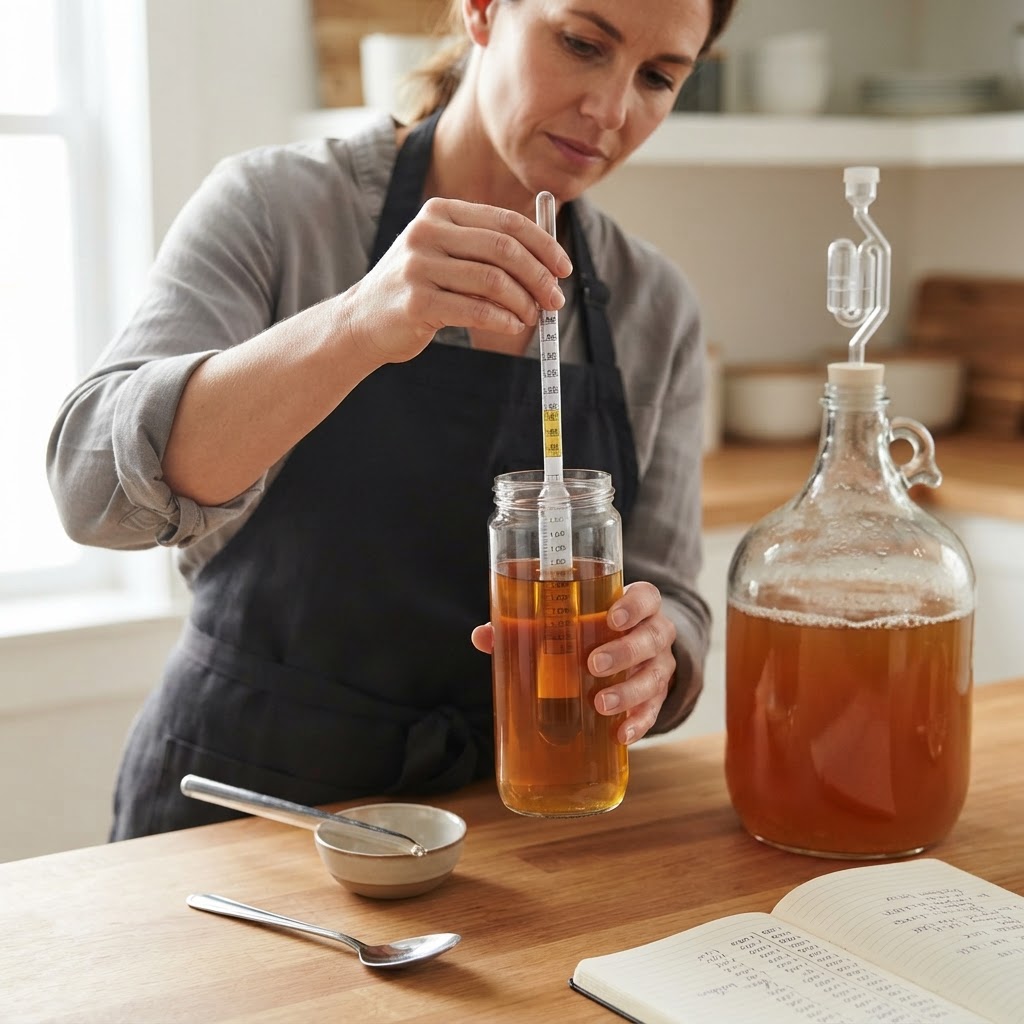
A hydrometer turns “I think it has finished” into something you can actually check.
Beginners need only a simple starter setup. Repeat consumables, replacement parts and optional upgrades become useful later, once you know which parts of the hobby you actually enjoy.
A heat belt, cooling setup or controlled space can make fermentation more predictable.
Explore equipment
Much easier and more consistent if you bottle regularly.
Explore equipment
Useful once you move beyond kits and start working with larger amounts of fresh fruit or grapes.
Explore equipment
Accurate scales, pH measurement and acid testing become more useful as recipes get more ambitious.
Explore equipment
Optional, but useful if you want brighter, more stable wine before bottling.
Explore equipment
Once one batch becomes six, bottle storage stops being theoretical.
Explore equipment
Once the first batch works
Use these routes to go deeper into equipment, ingredients, methods and the practical decisions that shape a home-made wine.
Cookies with your coffee?
Essential storage keeps Sipping working. Optional Google Analytics helps us understand what people find useful, but stays off unless you choose it. You can change this choice at any time.
Read our Cookie Policy